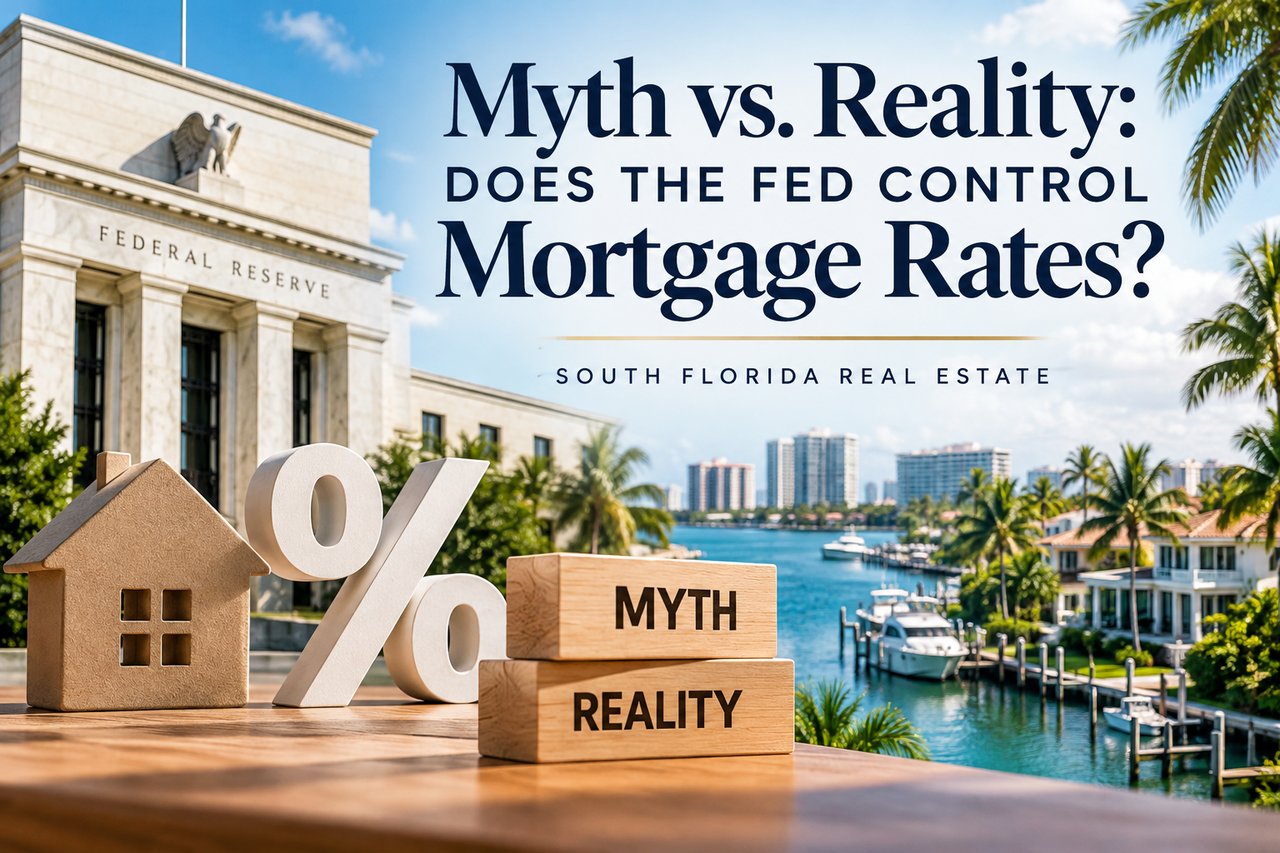
When the Federal Reserve makes headlines about raising or lowering interest rates, homebuyers and sellers across South Florida pay attention. After all, mortgage rates play a major role in affordability, purchasing power, and the overall real estate market.
But one of the biggest misconceptions in real estate is that the Federal Reserve directly controls mortgage rates.
The truth? The Fed influences mortgage rates, but it doesn't set them.
Understanding the difference can help buyers and sellers make smarter real estate decisions, especially in competitive markets like Palm Beach Gardens, Jupiter, North Palm Beach, and throughout South Florida.
Myth #1: When the Fed Cuts Rates, Mortgage Rates Automatically Drop
Reality: Mortgage rates don't always move in the same direction as Federal Reserve rate changes.
The Federal Reserve controls a benchmark known as the federal funds rate, which influences short-term borrowing costs throughout the economy.
However, most 30-year fixed mortgage rates are more closely tied to the bond market, particularly yields on 10-year U.S. Treasury notes and the pricing of mortgage-backed securities.
That means the Fed could announce a rate cut, and mortgage rates might stay the same or even increase.
Why? Because mortgage lenders and investors are looking at the bigger economic picture, including inflation, employment trends, economic growth, and expectations about future interest rates.
Myth #2: Buyers Should Wait Until the Fed Cuts Rates Before Purchasing a Home
Reality: Waiting for a Fed announcement doesn't guarantee a better mortgage rate or a better deal on a home.
For South Florida buyers, timing the market can be especially challenging.
Imagine finding the perfect home in Palm Beach Gardens or Jupiter, but deciding to wait six months because you're expecting interest rates to fall.
During that time, several things could happen:
Home prices could increase or decrease depending on local market conditions.
Competition could intensify if lower mortgage rates bring more buyers into the market.
The home you love could sell to another buyer.
Mortgage rates might not fall as much as anticipated.
Instead of focusing exclusively on what the Federal Reserve might do next, buyers should consider their personal finances, long-term plans, and the opportunities available in today's market.
The right time to buy isn't necessarily when interest rates hit their lowest point. It's when the home, price, financing, and your personal circumstances make sense.
Myth #3: The Federal Reserve Has No Impact on Mortgage Rates
Reality: The Fed has a significant influence on mortgage rates, even though it doesn't control them directly.
Federal Reserve decisions affect investor expectations, inflation forecasts, and the broader financial markets.
When the Fed signals that inflation is cooling or that economic growth is slowing, bond yields may decline, potentially helping mortgage rates move lower.
On the other hand, concerns about persistent inflation can push long-term yields higher, even when the Fed is lowering short-term rates.
It's also important to understand that financial markets often anticipate Fed decisions weeks or months before they're officially announced. By the time a rate cut happens, mortgage rates may have already adjusted.
That's why following the Fed's announcements alone doesn't tell the complete story.
What Does This Mean for the South Florida Real Estate Market?
South Florida is a unique real estate market, influenced by factors that extend far beyond national interest rates.
From waterfront estates in North Palm Beach to luxury communities in Palm Beach Gardens and family-friendly neighborhoods in Jupiter, local housing decisions depend on a combination of financing costs, inventory, property values, insurance expenses, and buyer demand.
For buyers, mortgage rates are just one piece of the affordability equation. Property taxes, homeowners insurance, HOA fees, and potential condominium assessments can significantly affect monthly housing costs.
For sellers, understanding the relationship between mortgage rates and buyer activity is equally important. Lower rates may expand the pool of qualified buyers, but pricing a property appropriately for current market conditions remains essential.
And in South Florida's luxury market, where cash purchases are common, changes in mortgage rates may have a different impact than they do in more financing-dependent segments.
Should You Buy Now or Wait for Lower Rates?
There's no universal answer, and trying to perfectly time interest rates can be frustrating.
A buyer who purchases a home at a price they're comfortable with may have the opportunity to refinance later if mortgage rates decline, although refinancing isn't guaranteed and involves additional costs.
Meanwhile, a buyer who waits for lower rates could face different inventory levels, changing home prices, or increased competition.
The smartest approach is to evaluate the complete picture rather than make a decision based on a single economic announcement.
The Bottom Line
The Federal Reserve plays an important role in shaping the economy, but it does not directly determine what interest rate you'll receive on your mortgage.
Mortgage rates respond to a much broader set of economic forces, and South Florida real estate adds its own local market dynamics to the equation.
Whether you're buying your first home, relocating to Palm Beach County, investing in property, or preparing to sell a luxury residence, understanding how mortgage rates really work can help you make more informed decisions.
At Luxe Lifestyles, we believe successful real estate decisions begin with knowledge, preparation, and a clear understanding of the local market.
If you're considering buying or selling in Palm Beach Gardens, Jupiter, North Palm Beach, or the surrounding South Florida communities, our team is here to help you navigate your options with confidence.
Don't let mortgage rate headlines dictate your next move. Let informed decisions and local expertise guide the way.